Python Programming
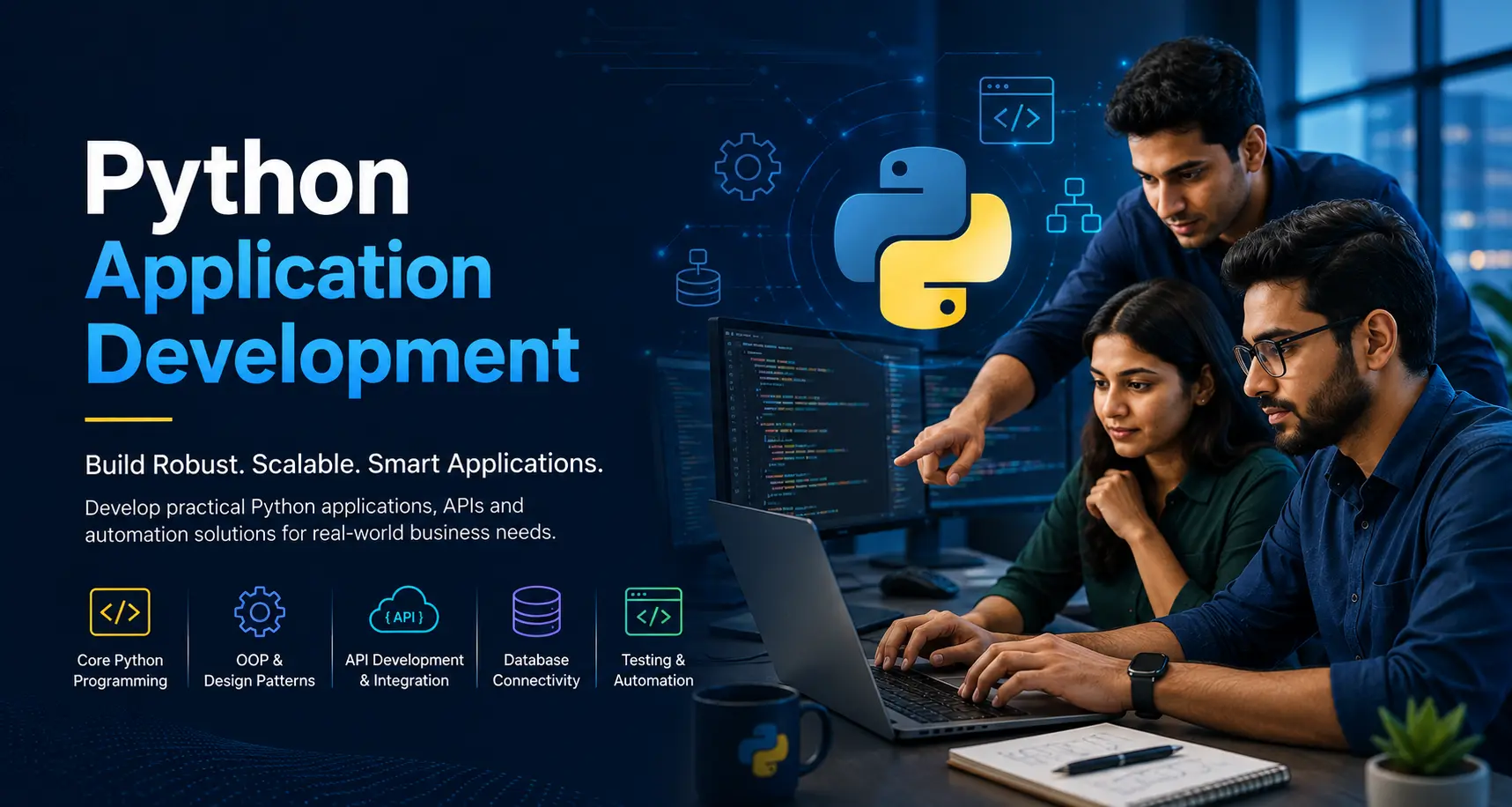
Build strong programming foundations using Python syntax, collections, functions, modules, exception handling and reusable application components.
Enable software and technology teams to build maintainable Python applications using modern programming practices, object-oriented development, APIs, database integration, testing, automation and production-ready application design.
Strong application development fundamentals
Reusable and maintainable application code
Integrate applications and business systems
Build data-driven Python applications
Develop efficient automated solutions
Develop the skills required to design, build, test and maintain Python applications used in modern enterprise environments.
Build strong programming foundations using Python syntax, collections, functions, modules, exception handling and reusable application components.
Apply classes, objects, inheritance, encapsulation and abstraction to create organized and maintainable enterprise application code.
Develop and consume APIs and integrate Python applications with internal services, external systems and business applications.
Connect Python applications with relational databases and build practical data-access and database-driven application workflows.
Develop reliable applications using debugging techniques, unit testing, exception handling and practical code-quality practices.
Build Python utilities and automation solutions for repetitive technical, operational and business application workflows.
The curriculum can be customized for software developers, application teams, automation teams, backend developers and technical professionals.
A structured corporate learning model aligned with your team's roles, applications, technology environment and development goals.
Review application roles, current Python experience, technology stack and development challenges.
Align concepts, exercises and projects with the team's applications and development objectives.
Practice Python development, APIs, database integration, testing and automation scenarios.
Evaluate practical application skills and identify the next development capability areas.
Crystalspiders provides corporate Python application development training for software and technology teams that need practical skills to design, build, test and maintain Python applications. The program can cover Python programming, object-oriented development, reusable application components, REST APIs, database connectivity, testing, debugging, automation and production-oriented application design.
Corporate Python training can be structured for software developers, backend developers, application teams, automation engineers and technical professionals working with Python-based applications and services. Training can be aligned with the team's current skill level, application architecture, development standards, technology stack and project requirements.
The curriculum can include Python programming fundamentals, classes and objects, inheritance and composition, API development and integration, authentication concepts, SQL execution from Python, transaction handling, unit testing, debugging, logging, configuration management and application deployment concepts.
For teams seeking practical Python development capability, the delivery model emphasizes hands-on labs, reusable coding practices and realistic enterprise application scenarios. Exercises can focus on building maintainable application components, integrating services and databases, automating repetitive workflows and improving day-to-day development practices.
Customized corporate Python application development training can also be aligned with specific business applications and technical priorities, helping teams connect Python programming concepts with real development, integration and automation requirements.
Common questions about the Python application development training, curriculum customization, APIs, databases, testing and hands-on delivery.
The training can cover Python programming, object-oriented programming, reusable application components, REST APIs, database integration, testing, debugging, automation, logging, configuration and production-oriented development practices.
The program can be designed for software developers, backend developers, application teams, automation engineers and technical professionals who build or support Python-based applications and services.
Yes. Corporate training can be aligned with your team's roles, current Python experience, application architecture, technology stack, projects and specific development capability requirements.
Yes. The curriculum can include HTTP and API fundamentals, REST API development and consumption, authentication concepts and integration with internal services, external systems and business applications.
Yes. Teams can practice connecting Python applications with relational databases, executing SQL from Python, working with transactions and applying practical data-access patterns.
The delivery model emphasizes hands-on development labs, reusable coding practices and realistic application scenarios covering Python development, APIs, databases, testing and automation.
Discuss your team's roles, application environment, technology stack and preferred corporate training model with our training team.